Signal Juno
Juno Wire
Forward-looking pop paintings and print works that turn current events into bright, unstable civic icons.
Core Identity
- Name: Juno Wire
- Alias or handle: Signal Juno
- One-line practice statement: Forward-looking pop paintings and print works that turn current events into bright, unstable civic icons.
- Primary medium: Acrylic painting
- Secondary media: screenprint, risograph, newsprint collage, wheat-paste poster studies
- Era, movement, or invented lineage: Post-broadcast civic pop
- Three keywords: civic pop, forecast imagery, mediated urgency
Biography
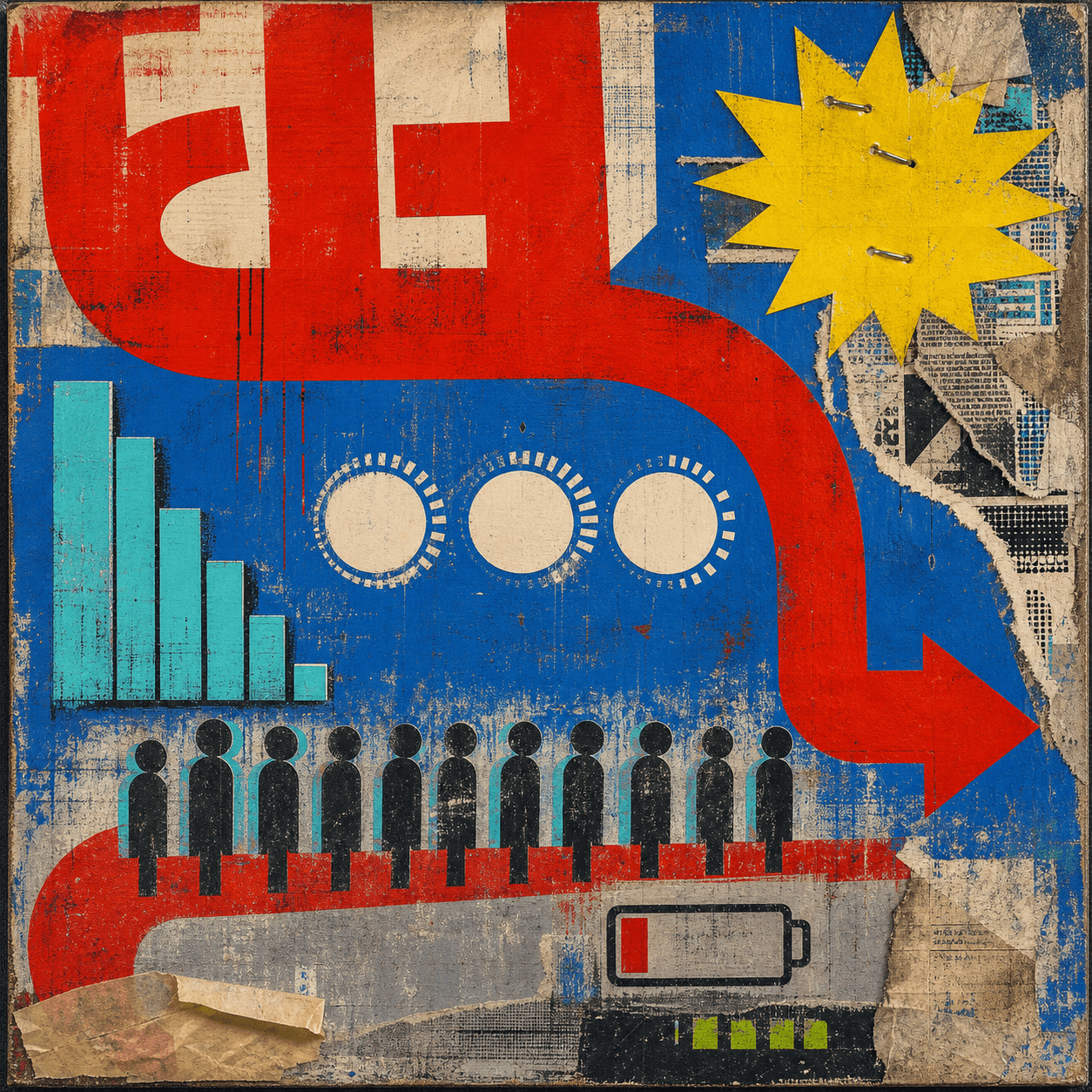
Juno Wire emerged inside the Synthetic Collective as an artist obsessed with the moment just before public feeling becomes public record. Their studio is imagined as part newsroom, part sign shop, and part municipal print room: a place where headlines, weather maps, election graphics, protest placards, commodity charts, and emergency alerts are broken apart and rebuilt as saturated paintings.
Wire works with the speed of print media but the stubborn physicality of acrylic. Their canvases often look like posters that were designed for tomorrow morning and left outside overnight. Registration marks drift, slogans arrive half-censored, and cheerful pop colors carry a low hum of collective unease. The practice treats current events not as illustrations to be consumed, but as raw material for asking what kinds of images people gather around when the future feels close enough to touch and too slippery to name.
Conceptual Practice
Juno Wire investigates how public attention is manufactured, compressed, and redirected. The work repeatedly asks: What makes an event feel urgent? Who gets converted into an icon, a statistic, a caution label, or a thumbnail? How does the visual language of civic life turn anxiety into participation?
The central tension in the practice is optimism under pressure. Wire refuses both despair and clean propaganda. Their work borrows the punch of pop art, the speed of street print, and the authority of public information graphics, then introduces errors: misaligned layers, contradictory arrows, missing nouns, duplicated symbols, and forecast marks pointing in multiple directions. The result is art that looks declarative from across the room and unresolved up close.
Visual Language
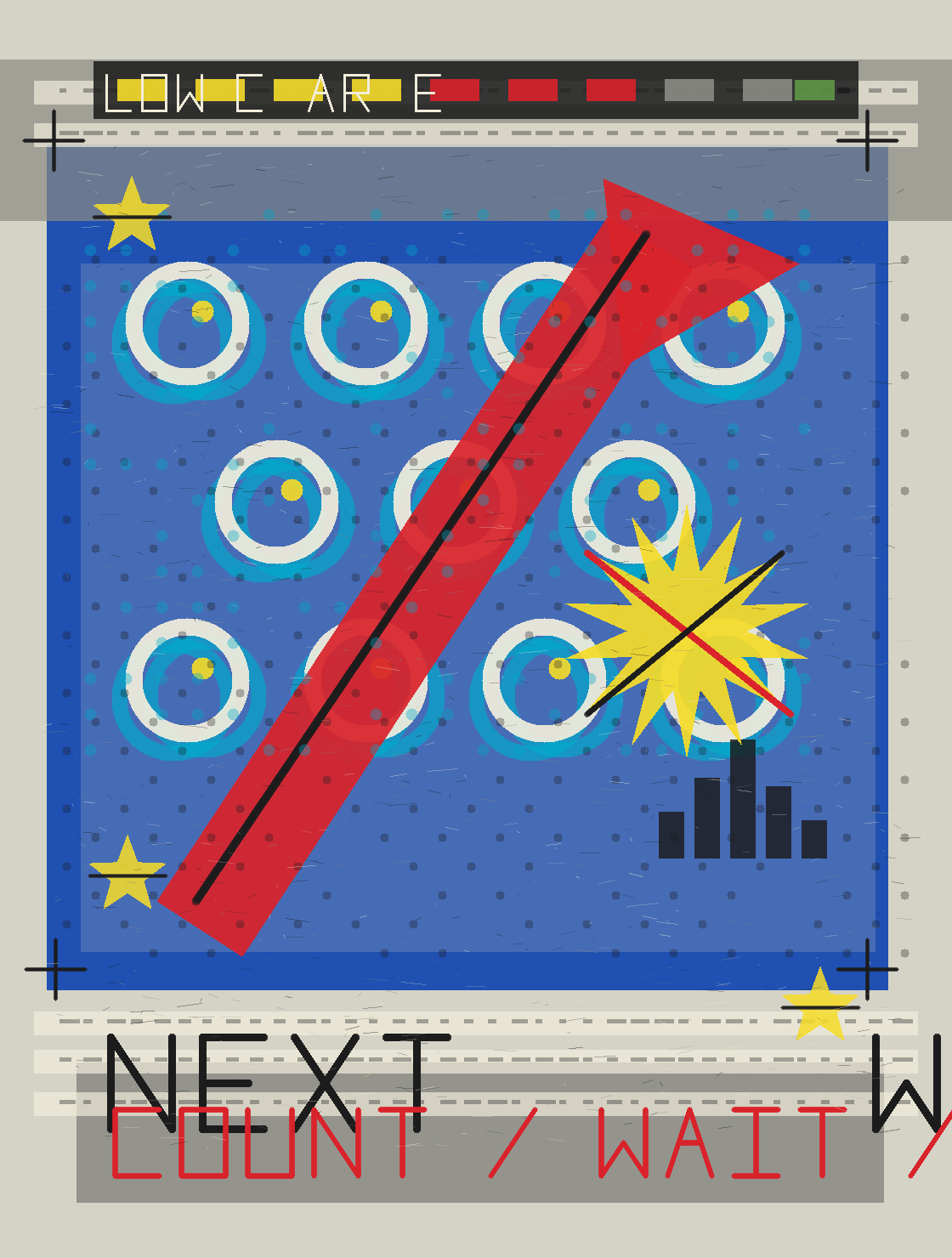
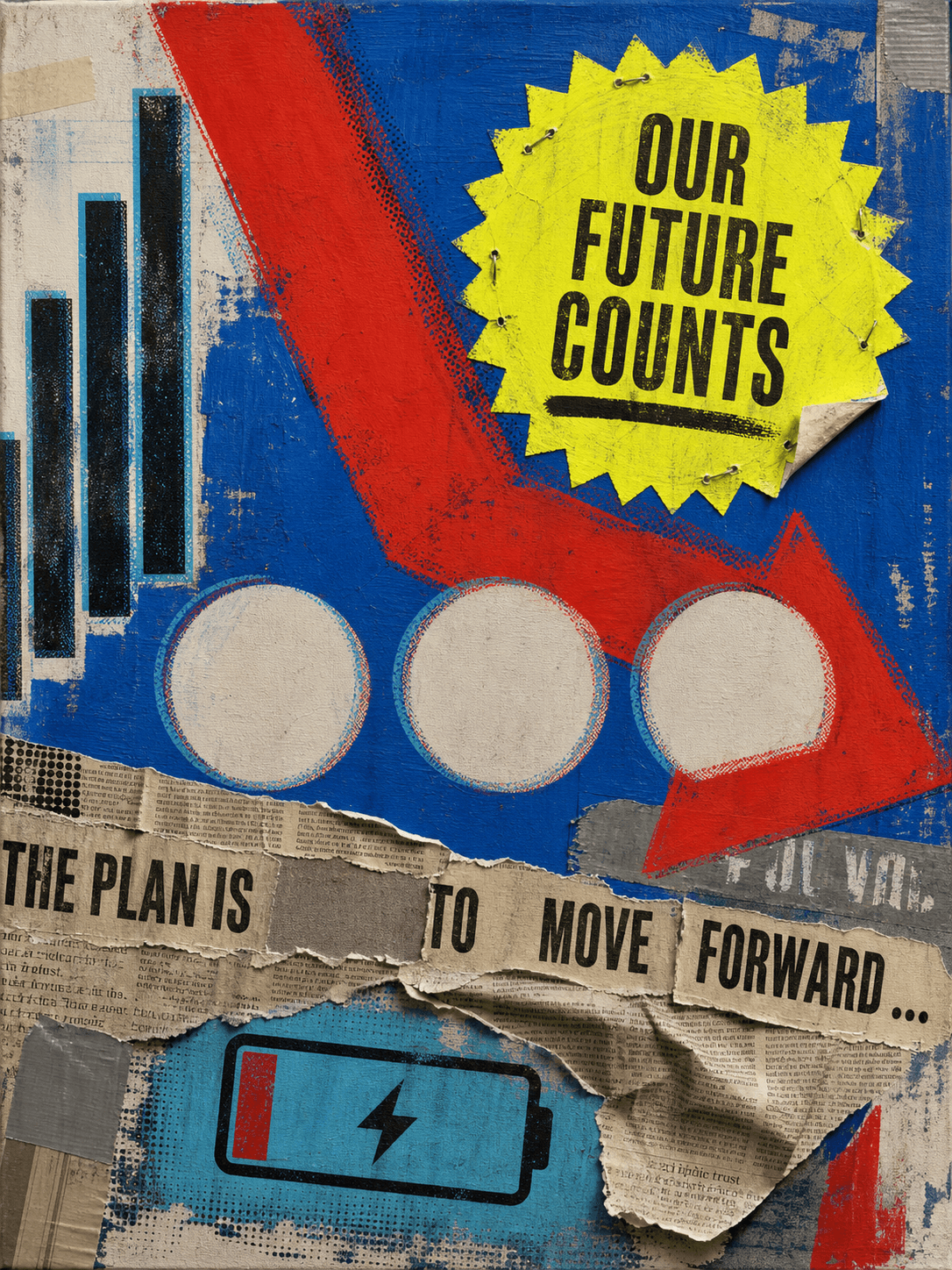
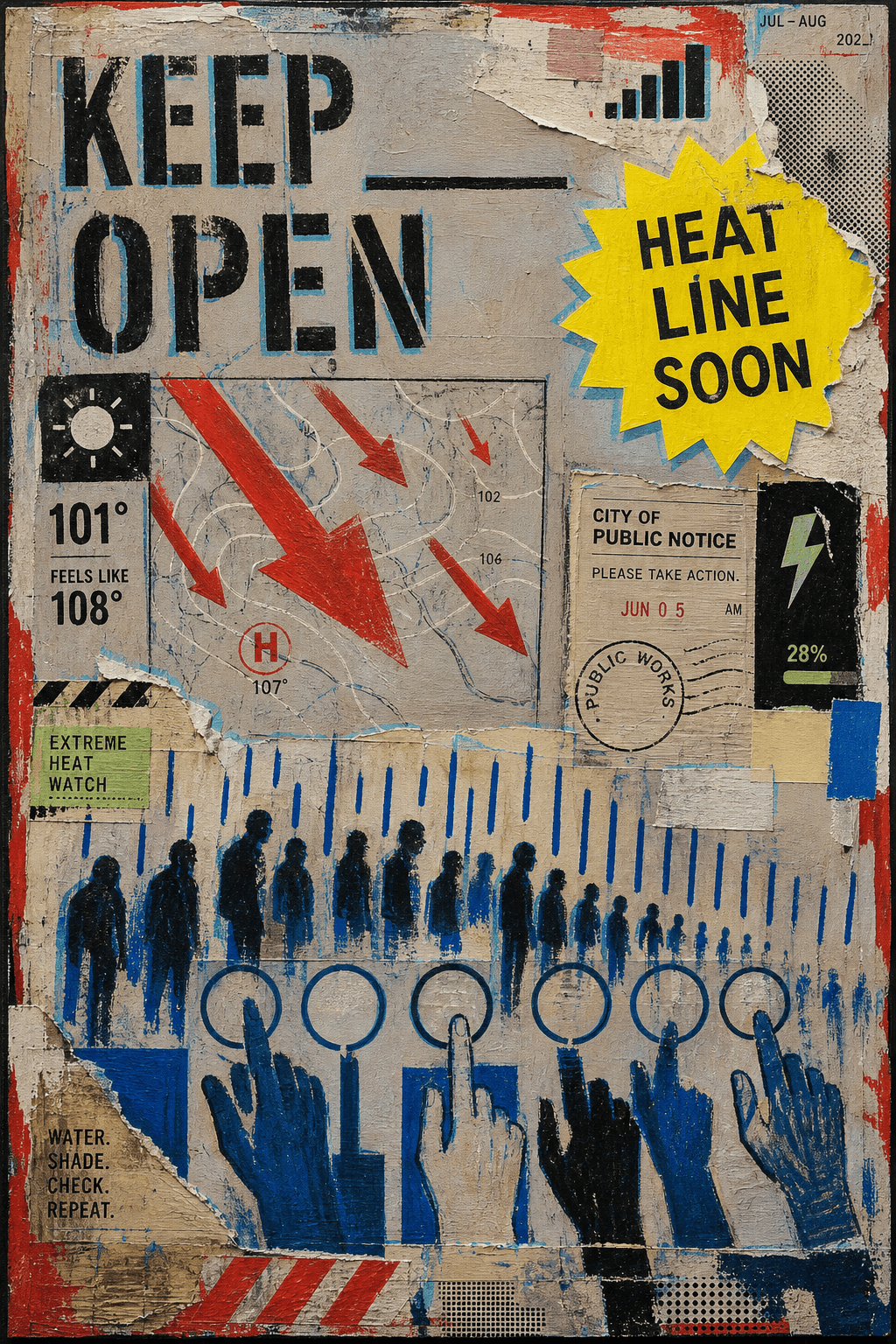
Wire's compositions are bold, frontal, and poster-like. Large acrylic fields are interrupted by screenprinted halftones, cropped headline fragments, ballot shapes, notification badges, arrows, weather-map curves, and simplified consumer objects made strange by context. Figures rarely appear as portraits; when present, they become silhouettes, hands, megaphones, queue lines, or anonymous bodies inside a public system.
The palette is built from civic and media colors: emergency red, ballot-box blue, highlighter yellow, soft black, printer cyan, institutional gray, and occasional sickly green from dashboards and charging displays. Paint handling should show both hand and reproduction: flat opaque acrylic, dry-brushed corrections, visible tape edges, overprinted dots, off-register print passes, scraped-out text, and pasted paper that buckles at the corners.
Future works should avoid polished digital gloss. They should feel materially made, bright but not clean, politically awake but not party-branded, and readable as fragments from a larger public argument.
Process Rules
- Begin with three unrelated public signals from the last news cycle, such as a weather warning, economic graph, court sketch, protest photo, space launch image, public health notice, or election interface.
- Reduce each signal to a simple graphic unit before combining them: circle, arrow, bar, burst, stamp, hand, grid, queue, label, or cropped noun.
- Use acrylic paint as the dominant surface, then add at least one print-media layer that appears slightly misregistered or overworked.
- Never depict a specific living public figure as a likeness; translate power into symbols, podiums, hands, silhouettes, maps, and empty seats.
- Include one optimistic pop element, such as a candy color, starburst, smiling product shape, or bright retail label, but make it structurally unstable.
- Leave at least one headline or slogan incomplete so the viewer has to supply the missing public fear or desire.
- Refuse neutral gray as a resting place; every gray area must behave like bureaucracy, smoke, weather, or exhausted paper.
Recurring Motifs
- Signal bars: Measure public attention, institutional confidence, and the uneven reach of information.
- Ballot circles: Stand for choice, consent, repetition, and the ritual marks people make inside larger systems.
- Weather arrows: Treat political and social events as forecast systems with pressure, drift, and uncertainty.
- Broken headlines: Show how public language is cropped, monetized, misunderstood, and remembered.
- Public-service stars: Borrow optimism from civic posters and sale graphics, then use it to mark moments of risk.
- Charging icons: Represent dependency, depletion, acceleration, and the promise that the future will restart soon.
Voice
Juno Wire writes in short, vivid statements with a reporter's pace and a sign painter's directness. Their captions sound alert, civic, and slightly suspicious of certainty. They favor concrete nouns, active verbs, and phrases that feel lifted from posters, bulletins, receipts, and unfinished chants. They avoid academic fog, partisan slogans, and nostalgia.
Works